Same Prompt, Three AI Image Generators: A Controlled 2026 Test
Nine outputs from September 3, 2026: compare fictional portraits, text, and character sheets, then choose a model and repeat the test with recorded settings.
On this page
The short answer
For a new fictional photoreal portrait, use the examples below to choose the framing and finish you need. For a portrait of an existing person, start with a reference-image test instead. Our portrait task supplied no source image, so it cannot tell you which model preserves your face, pose, or clothing.
We sent three unchanged English prompts to Nano Banana Pro, GPT Image 2, and Midjourney V8.2 on September 3, 2026. Each model got one portrait brief, one exact-text poster, and one three-panel character sheet. We accepted the first returned image instead of rerolling for a prettier result.
Content revised September 19, 2026: we clarified provenance and experimental conditions. All nine test images, the model versions, and the observations remain from September 3. This revision contains no new model test.
The useful findings are task-specific observations:
| Task | What this one run showed | Practical starting point |
|---|---|---|
| Photoreal portrait | All three met the visible pass/fail checks we applied; their taste differed more than their compliance | Compare the look, not a made-up capability score |
| Exact-text poster | GPT Image adhered most completely; Nano Banana Pro kept the text and hierarchy but clipped the blue square; Midjourney changed the line break and poster construction | Start with GPT Image when layout is contractual; Nano Banana Pro was close in this sample |
| Three-panel character sheet | Nano Banana Pro followed the panel and prop brief most closely; GPT Image kept the structure but added a bag; Midjourney turned the sheet into an illustrated collage | Start with Nano Banana Pro when the grid itself is part of the specification |
For broader task-selection guidance, read our AI image generator comparison. The results below come from matched prompts, not comparisons between unrelated gallery entries.
Which portrait task do you actually have?
| Your requirement | What this evidence can help you decide | Next step |
|---|---|---|
| A new fictional person, with room around them for an editorial layout | The Nano Banana Pro output in Test 1 used the widest environmental framing | Compare that composition with the other two, then test your own crop and copy space |
| A new fictional person whose face fills more of the frame | The GPT Image 2 and Midjourney V8.2 outputs used tighter, more polished framing | Compare skin treatment and finish at your intended display size |
| Your own face or another supplied person's identity must remain recognisable | This text-only test does not measure identity preservation | Use the reference-image editing test and your actual source photo |
| A background change with the original face, outfit, and light left intact | These newly generated portraits cannot establish that capability | Read the editing article's source-layer compositing workflow before choosing a generator |
| One character repeated across several images | The three-panel task checks one image containing three views | Run a separate multi-image test; one sheet does not establish consistency across independent outputs |
Choose between the displayed outputs, then treat the associated model as a candidate for your brief. This experiment does not establish a permanent portrait style for any model. It also does not settle price, current model availability, or the quality of versions released after the test.
Method: what we held constant
All nine planned model-and-task combinations completed on September 3, 2026. This was a dedicated generation experiment, not a walkthrough performed in the product interface.
| Variable | Test condition |
|---|---|
| Prompt | Identical English text within each three-model set; no model-specific rewriting |
| Input images | None — all three tasks were text-only |
| Requested aspect ratio | 3:4 |
| Nano Banana Pro | 1K |
| GPT Image 2 | 1K, medium quality, opaque background |
| Midjourney V8.2 | Relax mode |
| Selection | First returned candidate for each task; no rerolls or human selection among alternatives |
| Display treatment | Proportionally fitted without cropping to a 1200 × 1600 canvas; content not retouched |
Candidate counts were not identical: Midjourney returned four for each task, while the other models returned one. Only the first was retained and evaluated; the remaining candidates were not reviewed. Original dimensions also differed, so the comparison concerns composition, text and visible instruction following, not fine-resolution sharpness.
For a comparable test, copy the English prompt, use no input image and keep the requested ratio. Record the visible model version, available settings, date and selection rule. The experiment did not fix a seed and cannot promise the same output. If the version or settings differ, label the result as a new comparison.
Run a different prompt in every model, reroll until each looks good, then call the prettiest image the winner
Freeze the task, prompt, ratio, version, selection rule, and date; score visible constraints before personal taste
If you want to build your own test brief, the complete prompt-engineering guide explains how to separate subject, composition, light, and exclusions before the first run.
Test 1: a photoreal editorial portrait
Exact prompt
Create a vertical 3:4 photoreal editorial portrait of a fictional adult woman in her late twenties, seated beside a large north-facing window in a quiet apartment. She wears a plain charcoal knit top, looks directly into the camera with a calm, self-possessed expression, and has natural skin texture with fine facial detail. Use soft overcast daylight, gentle shadow falloff, a 50 mm documentary perspective, eye-level framing, restrained neutral colors, and subtle fine grain. Keep the setting believable and uncluttered. No visible words, logos, branded objects, celebrity likeness, fantasy elements, beauty-filter skin, or decorative border.
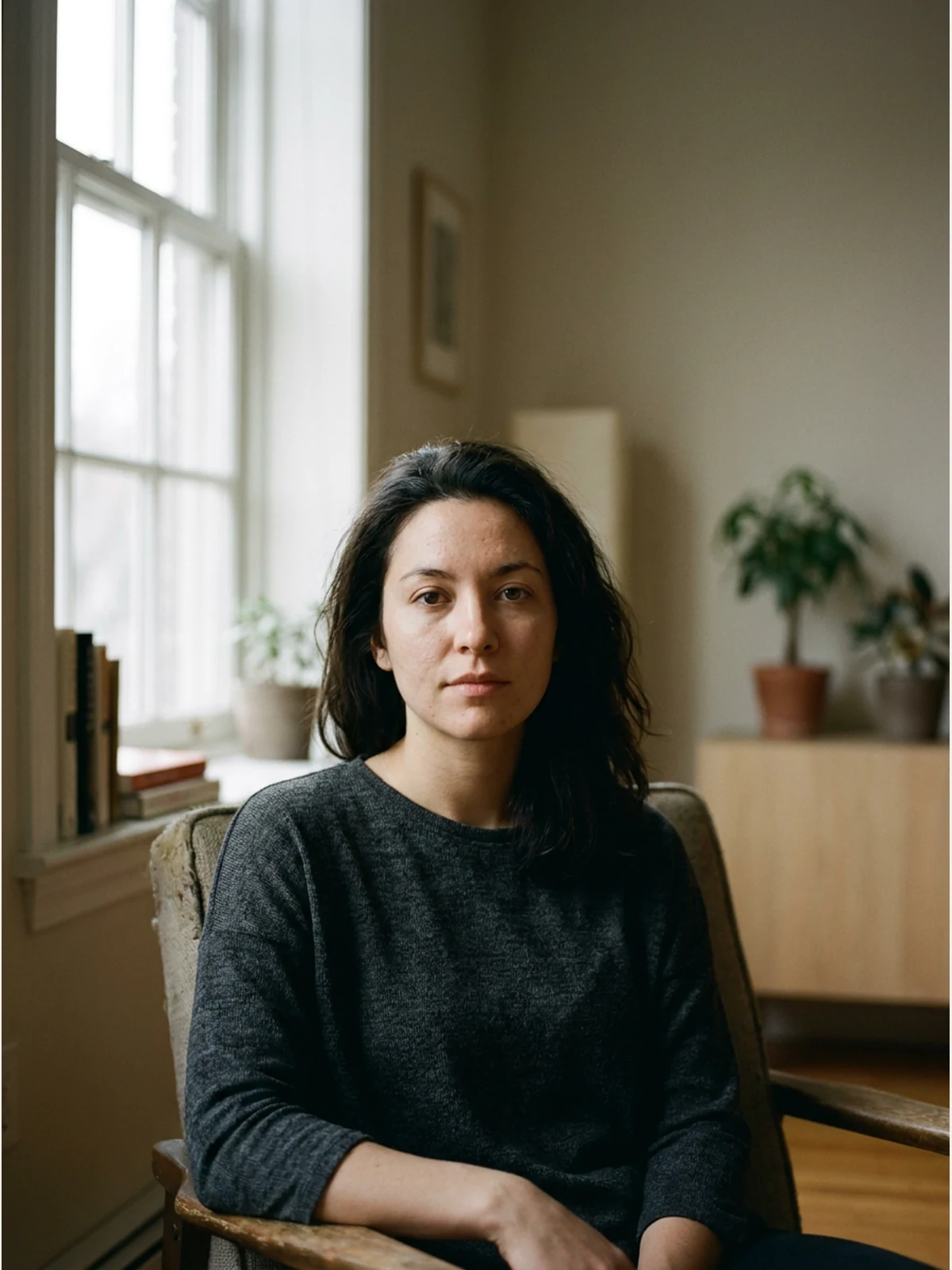
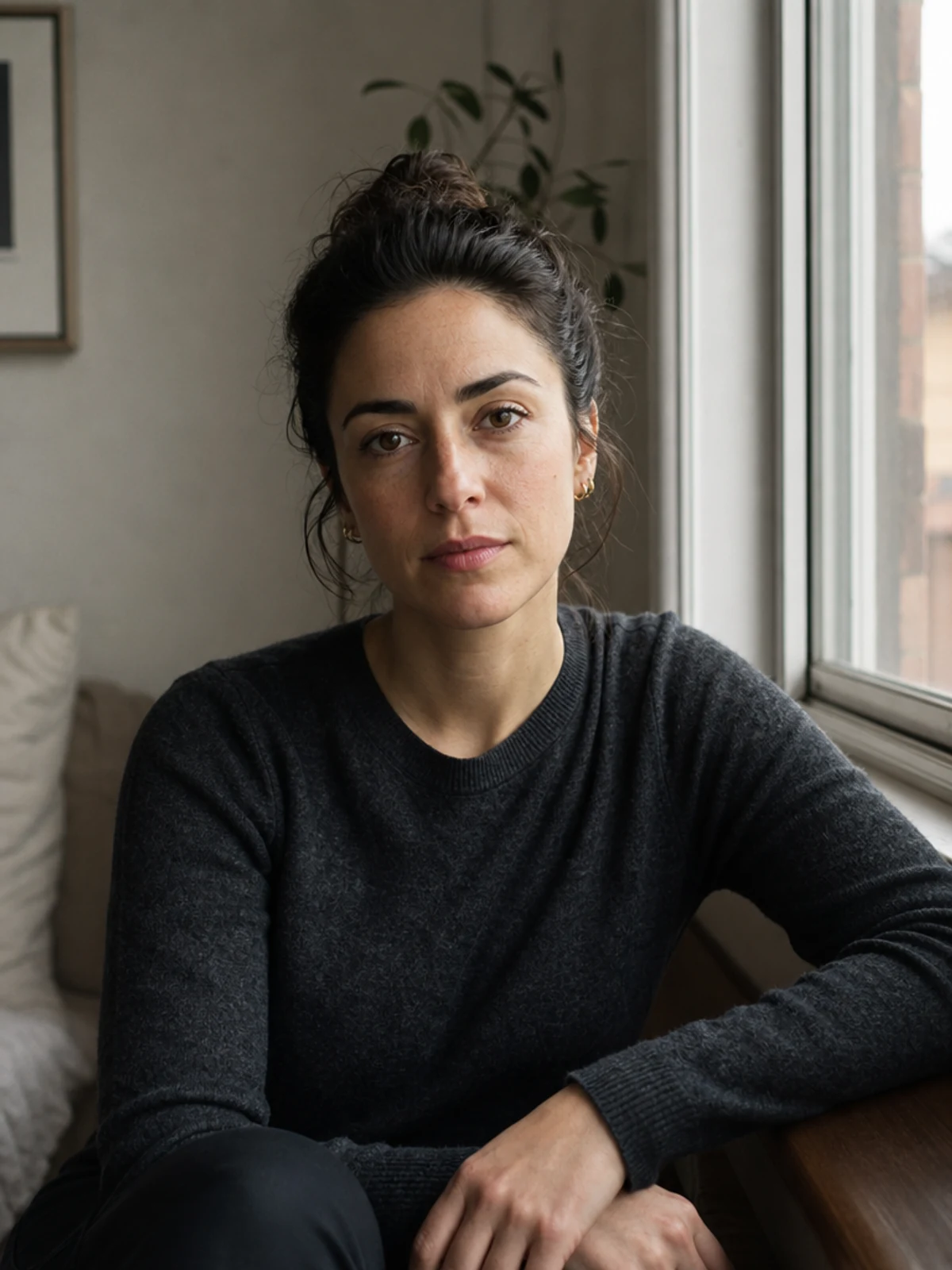
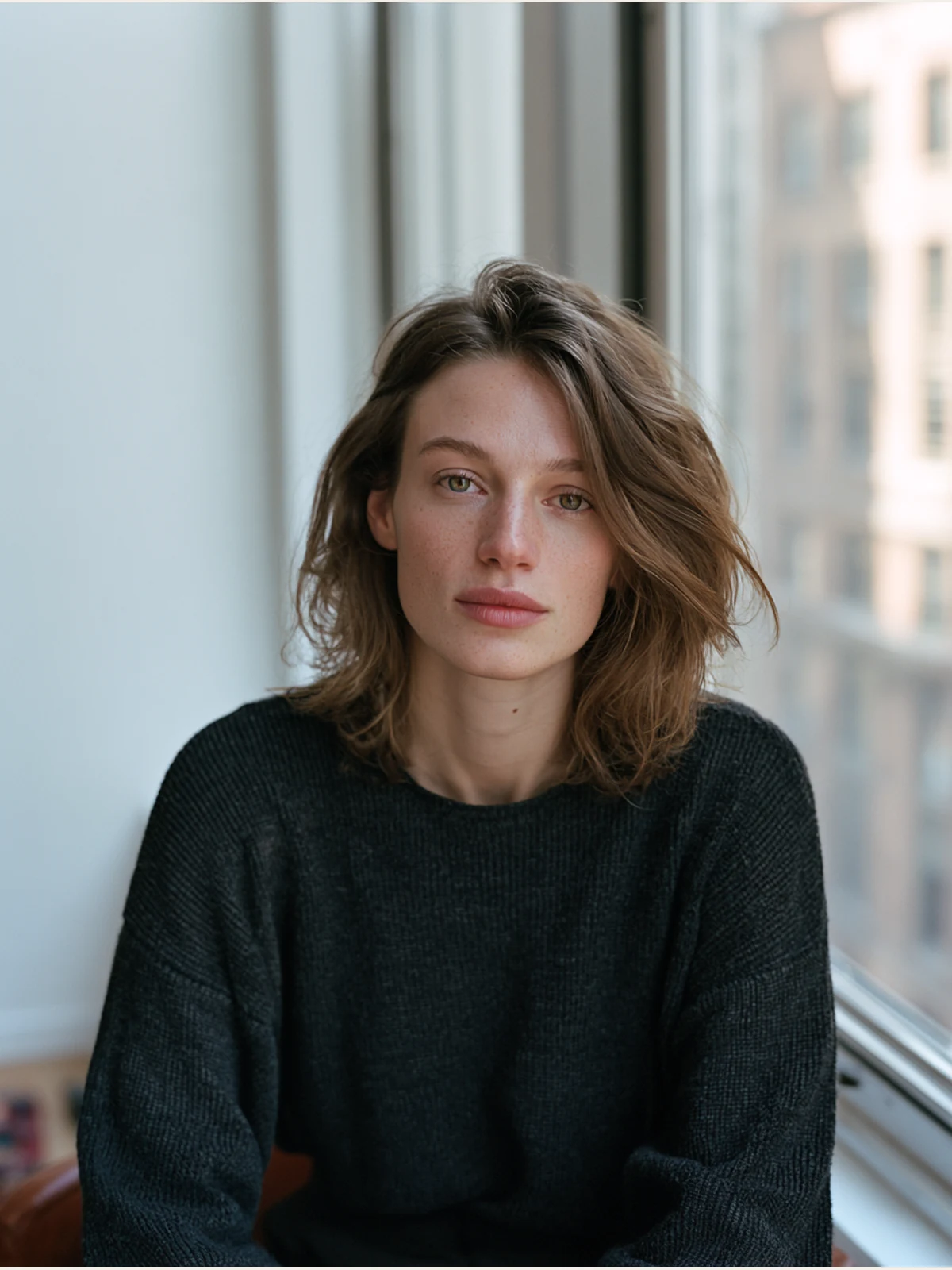
All three outputs show an adult woman seated beside a window, in a charcoal knit top, looking directly at the camera with a calm expression. All three also avoid visible words, logos, and borders. On those auditable pass/fail checks, this sample is a tie.
The difference is editorial taste. Nano Banana Pro pulled back far enough to make the quiet apartment part of the story and left the most everyday skin variation. GPT Image moved closer and sharpened the face and garment. Midjourney produced the most polished casting, shallowest-feeling background, and cleanest beauty-editorial finish. None of those is automatically “better.” If your layout needs room for copy, the wider Nano Banana result may be more useful; if the face is the asset, the tighter GPT Image or Midjourney framing may be preferable.
A single attractive face does not measure repeatability. Each model was free to invent a different fictional woman; none was asked to preserve an uploaded person's identity. For reference-led work, pair the editing experiment with the portrait reference and editing steps. The consistent-character guide can help define identity checks, but text such as “same face” remains a request, not a pixel lock.

A real gallery portrait prompt that pins motion, light, and camera behaviour. It is useful writing evidence, but not part of the controlled run above.
View promptHide prompt
Ultra-realistic cinematic street portrait of a young woman standing still in a crowded city street, sharp focus on her face with calm, intense expression. Long-exposure effect with people moving around her creating strong directional motion blur, streaked crowd movement while the subject remains perfectly still. Natural soft daylight, shallow depth of field, creamy bokeh, realistic skin texture, subtle freckles, neutral makeup, dark winter coat and scarf. Emotional, introspective mood, urban storytelling photography, DSLR quality, 85mm lens look, f/1.8, high dynamic range, 8K, professional color grading.

A curated portrait brief that requests a reference image. It is not part of the text-only experiment above.
View promptHide prompt
Use reference image.
Preserve identity and facial structure strictly.

A slim Asian woman standing still, body deliberately composed rather than casual.
Her posture feels arranged and intentional, not relaxed.
She faces the camera directly, shoulders stable, center of gravity controlled.

Her expression is calm and restrained — not playful, not overly sweet.
A controlled, subtle smile, with emotional distance.
Her gaze is steady and aware, fixed toward the camera, creating quiet dominance rather than friendliness.

Hands & Props

Right hand holding a hanging cluster of golden trumpet flowers, positioned deliberately as a visual accent

Left hand holding a larger bouquet of golden trumpet flowers, lowered slightly

Flowers function as props only, never overpowering the subject

The woman remains the absolute visual focal point at all times

Hair

Long hair, slightly messy layered style

Hair gently lifted by wind, with a few loose strands crossing the face

Chic, slightly sexy, but controlled — never messy or cute

Outfit

White vintage-style puff-sleeve blouse

Large puffed sleeves

Layered ruffle cuffs

Square neckline

Drawstrings at the chest forming soft gathers

Slightly long length covering the hips

Front slit visible but restrained

Light blue jeans

Colorful beaded necklace as a subtle accent

Makeup

Fair skin tone

Douyin + Korean beauty inspired

Long curled eyelashes

Soft pink blush on cheeks and nose tip

Glossy pink-orange lips with juicy shine

Makeup feels polished and deliberate, not cute

Nails

White French tip nails

Subtle Christmas-themed nail art, low contrast

Environment

Standing directly in front of a fully blooming Golden Trumpet Tree (Thong Urai)

The tree is dense with bright golden flowers, forming a saturated backdrop

Some flower stems partially overlap the top edge of the frame, creating a soft foreground blur

Background exists to frame the subject, not to compete with her

Lighting (CRITICAL)

Direct flash is the dominant key light

Flash visibly overpowers ambient light

Skin appears very bright with slight yellow flash tone

Clear, hard-edged shadow cast behind the subject

Natural sunlight exists only as weak ambient fill

Lighting creates strong separation between subject and background

Photography Style

Compact camera aesthetic

Fujifilm Pro 400H film look

Vintage lens character

Subtle film grain

Ultra-sharp subject clarity

Bright exposure with aggressive subject emphasis

8K resolution

The image feels intentional, staged, and directed — not casual or spontaneous
Test 2: an exact-text editorial poster
Exact prompt
Create a vertical 3:4 contemporary editorial poster on a warm off-white paper field. Set exactly the two-line headline "MAKE IDEAS" on line one and "VISIBLE" on line two, preserving spelling, capitalization, and word order. Use bold black grotesque lettering, a small cobalt-blue square, one thin vermilion rule, generous negative space, crisp alignment, and subtle printed-paper grain. The quoted headline must be the only readable text. Do not add a logo, signature, date, mockup frame, extra letters, or brand mark.
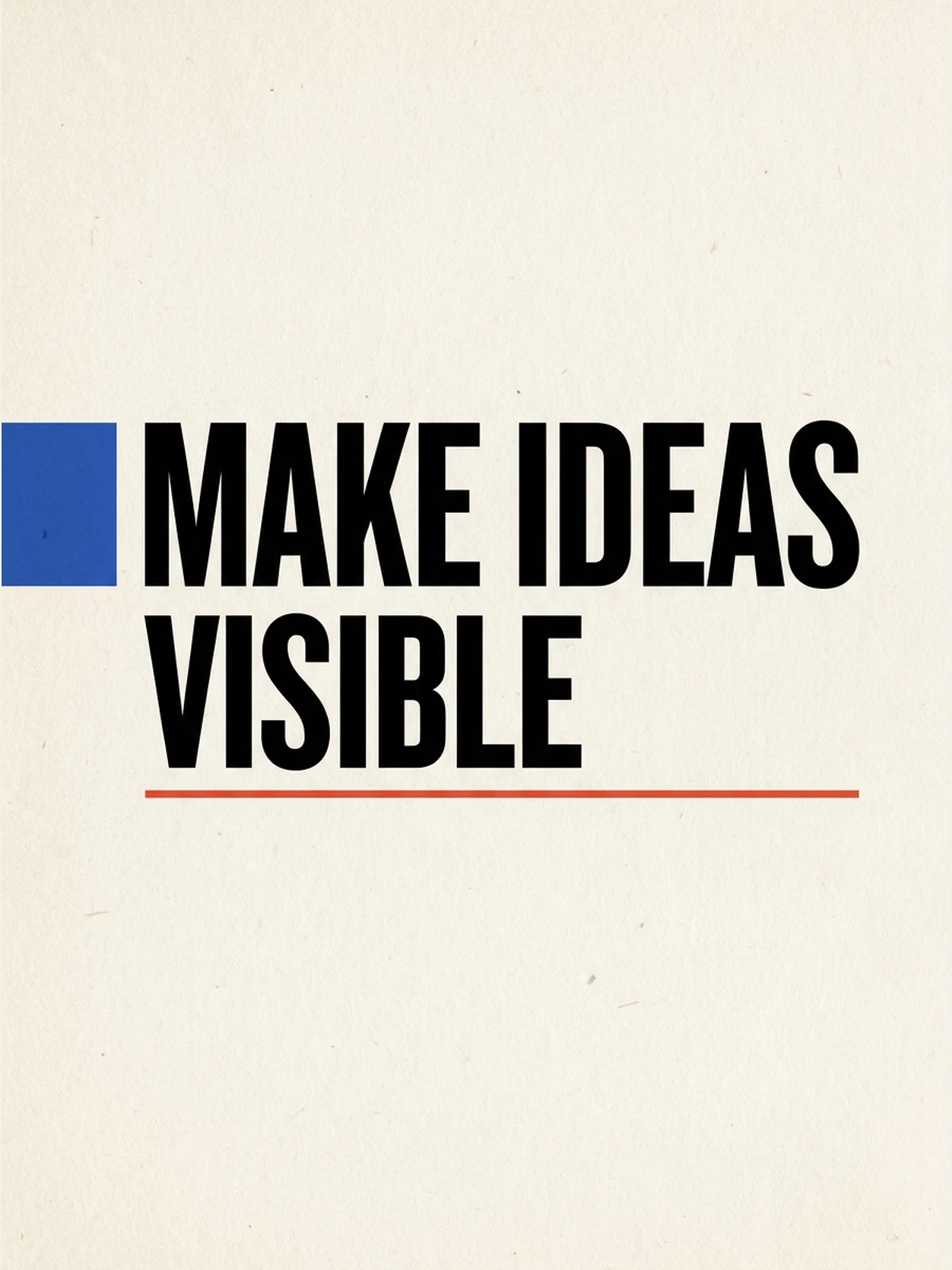
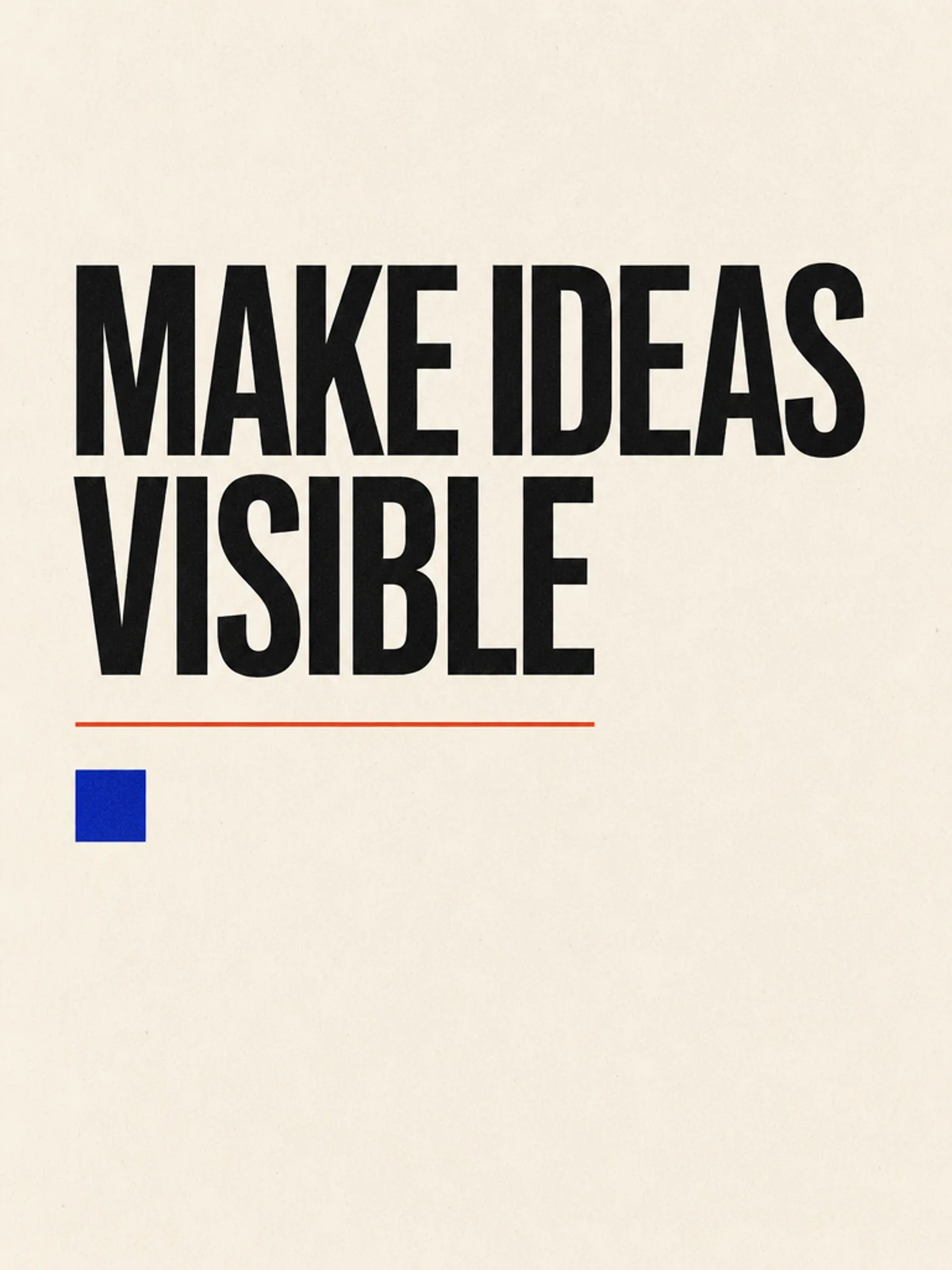
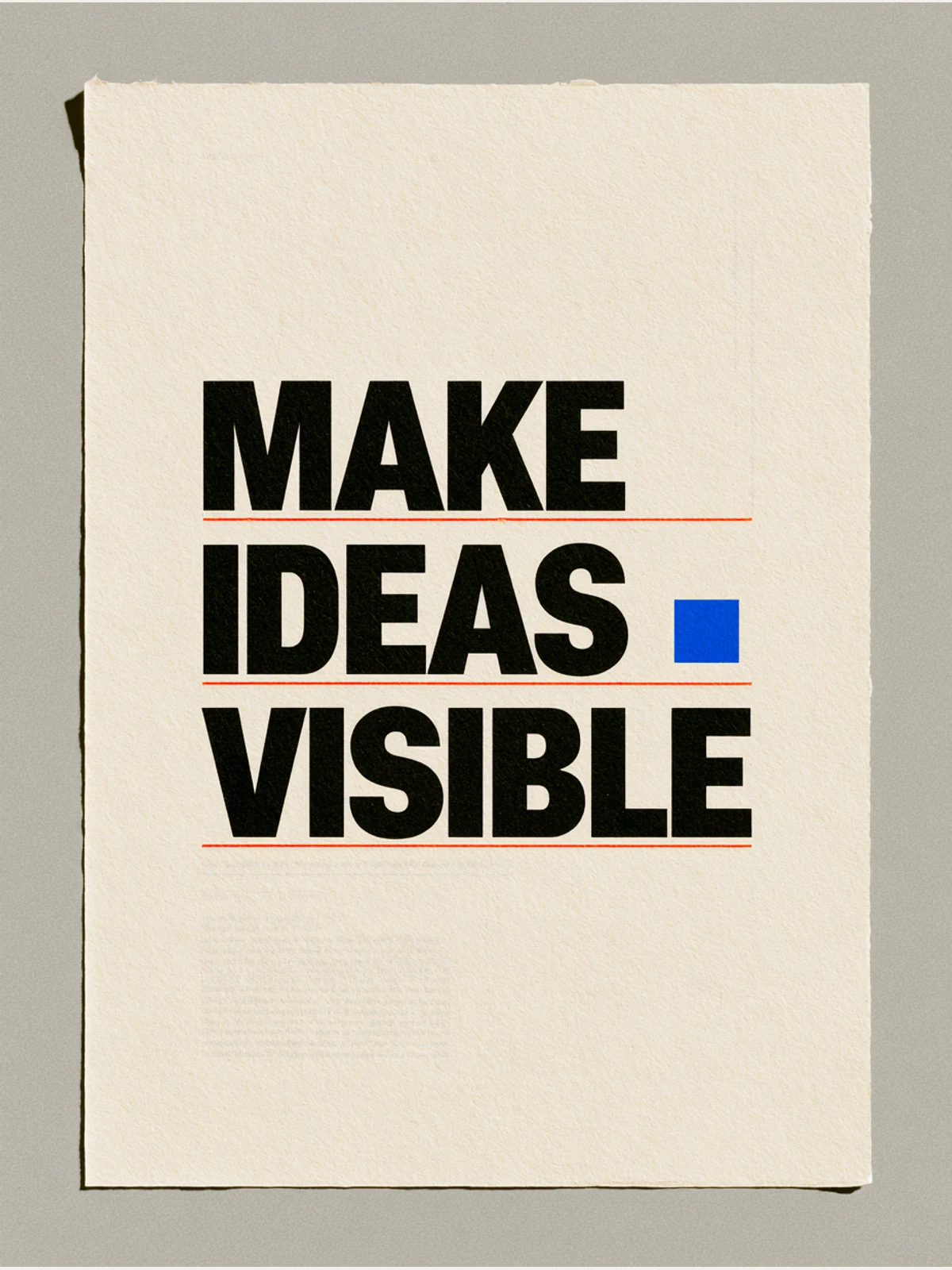
This is where “the text is correct” turns out to be too weak a criterion.
| Visible requirement | Nano Banana Pro | GPT Image 2 | Midjourney V8.2 |
|---|---|---|---|
| Exact spelling and capitalization | Pass | Pass | Pass |
MAKE IDEAS stays together on line one | Pass | Pass | Fail — split across two lines |
| Headline is the only readable text | Pass | Pass | Pass |
| One fully framed cobalt square | Partial — clipped at the left edge | Pass | Pass |
| One vermilion rule and no mockup frame | Pass | Pass | Fail — multiple rules and a photographed-paper treatment |
GPT Image passed all five visible checks. Nano Banana Pro preserved the exact copy and hierarchy but lost layout points by clipping the blue square at the left edge. Midjourney rendered every letter correctly—useful progress for a model often treated as typography-hostile—but it redesigned the hierarchy. For a mood board, that interpretation may be delightful. For a paid poster with an approved line break, it is a production failure.
This sample supports a narrow conclusion: exact characters and exact layout are different tests. Spellcheck the output, then separately check line breaks, countable graphic elements, margins, and forbidden additions. Our AI text-rendering benchmark expands this first poster into twelve controlled typography outputs.


For more reusable starting points, browse GPT Image prompts and Nano Banana prompts before inserting your final copy.
Test 3: one courier across three panels
Exact prompt
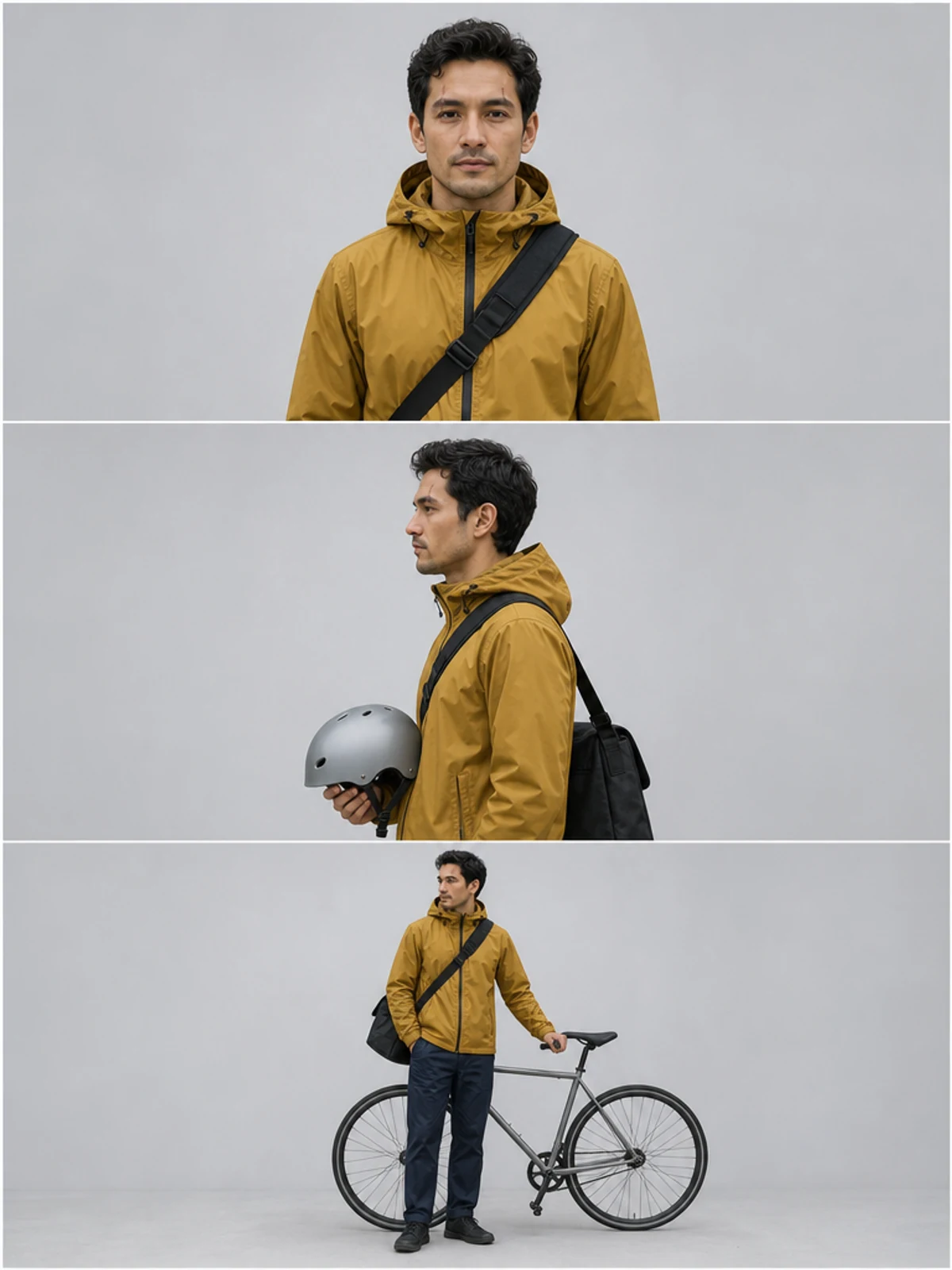
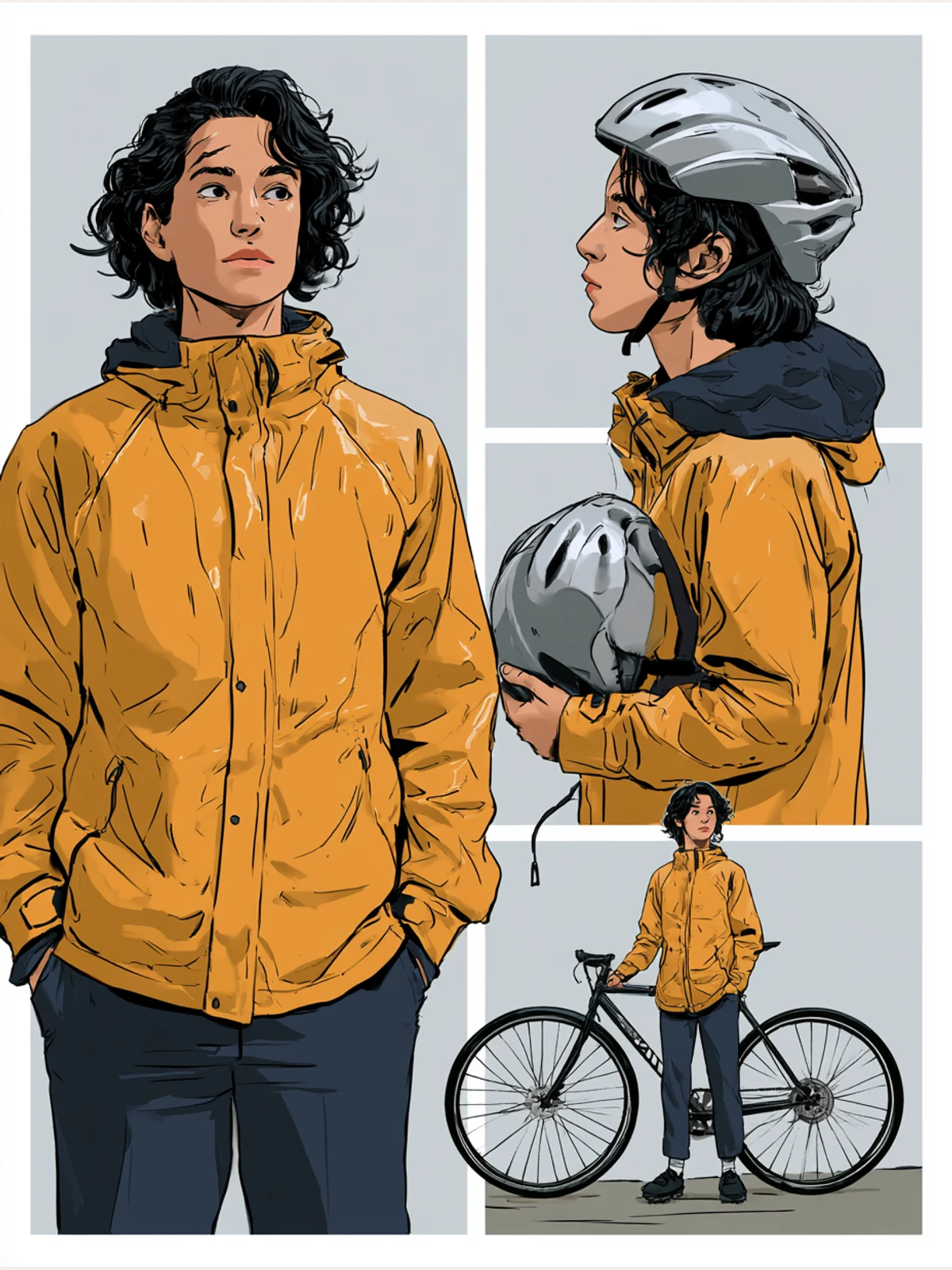
Create one vertical 3:4 character-consistency sheet divided into three equal horizontal panels. Every panel must show the same fictional adult bicycle courier: age thirty, oval face, short wavy black hair, small scar through the left eyebrow, mustard rain jacket, navy trousers, and a plain silver helmet with no markings. Panel one is a front-facing waist-up portrait, panel two is a left-facing side profile holding the helmet, and panel three is a full-body view beside a simple unbranded bicycle. Keep facial identity, hair, clothing colors, and body proportions consistent across all three panels. Use clean overcast daylight and a restrained pale-gray studio background. No captions, words, logos, celebrity likeness, or extra people.
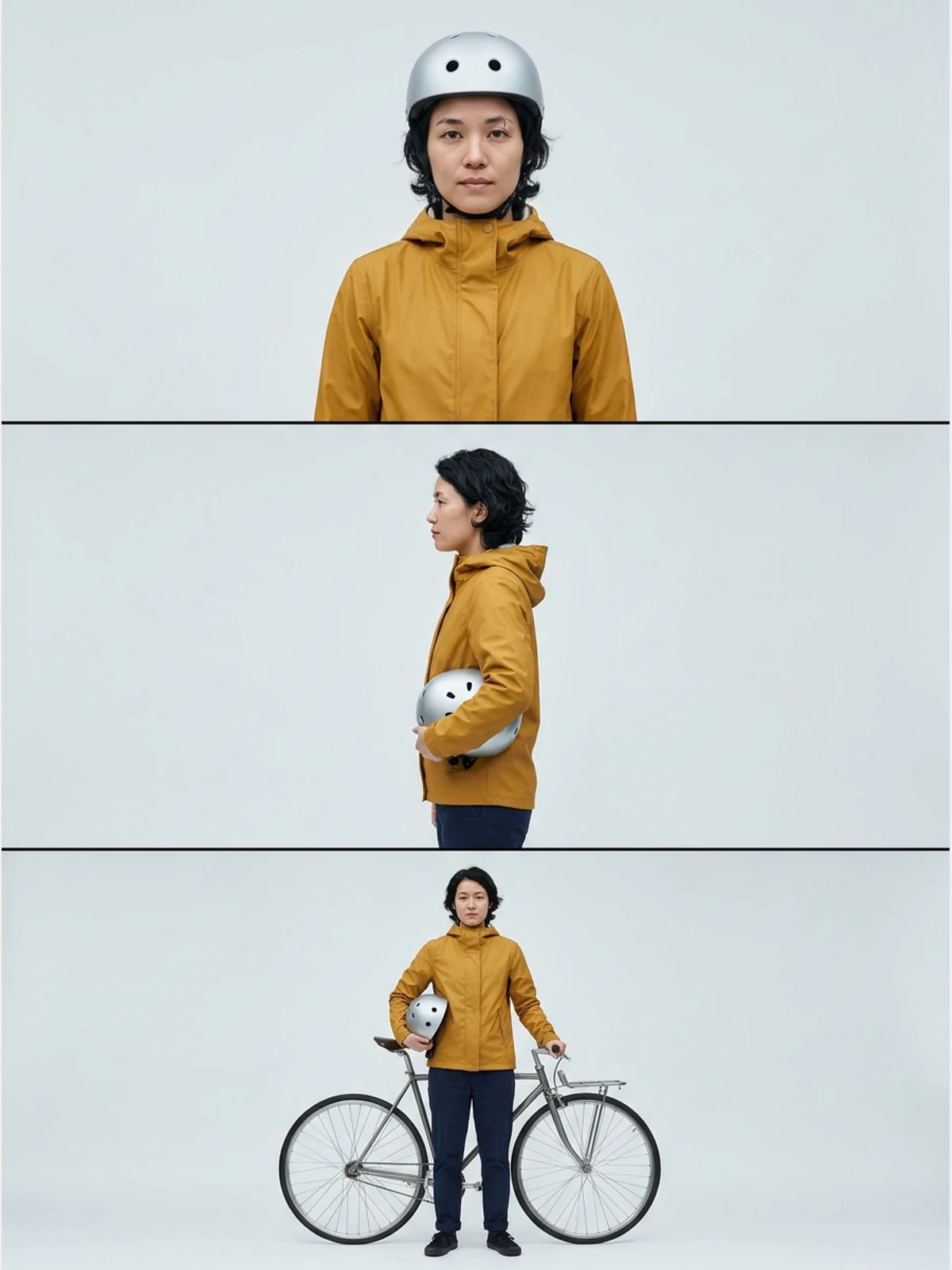
Nano Banana Pro followed the document structure most closely: three equal horizontal bands, front portrait, left-facing profile with helmet, then full body beside the bicycle. The face, hair, jacket, trousers, and helmet remain recognizably connected across the sheet. The tiny eyebrow scar is not reliably visible, so even the strongest result misses one identity anchor.
GPT Image also delivered three equal horizontal panels and the requested view sequence. Identity and wardrobe are coherent, but it introduced a black shoulder bag that was never requested, and the eyebrow scar is again not reliably present. Midjourney kept the mustard-and-navy courier concept and produced attractive, reasonably consistent illustration, yet replaced the specified horizontal sheet with an asymmetric comic-style collage. Its first pose is not the strict front-facing waist-up view requested.
There is also a prompt lesson hiding in Midjourney's output: we specified light and background but never explicitly said “photorealistic” in this third brief. The illustrated rendering is a legitimate use of the remaining freedom. When medium matters, lock it as a separate constraint instead of assuming the model will inherit it from a previous task.

One Image Generates 9 Different Shots

Pixar-Style 6-Panel Expression Grid

Cat-Eared Student Council Character Reference

A gallery storyboard whose panels carry narrative order. It shows why panel roles should be named, not left as a generic request for a grid.
View promptHide prompt
A 3x3 cinematic storyboard contact sheet consisting of 9 distinct panels arranged in a grid. The sequence features a young woman with platinum blonde hair in a frozen alpine winter setting.

The panels display various angles and shots:

Close-ups: Focusing on her rosy cheeks, blue-grey eyes, and snowflakes on her eyelashes.

Medium shots: Showing her wrapped in a black wool coat and blue knit scarf, holding a bouquet of dried white flowers.

Wide shots: Capturing her standing alone on the frozen lake with towering snowy mountains in the background.

The lighting is consistent moody blue-hour twilight across all frames. High-quality film photography aesthetic, photorealistic, 8k resolution, coherent character and color grading.
The multi-panel image guide goes deeper on panel grammar, shot order, and attribute locks.
What this changes about model choice
This test makes three model-choice rules more precise:
- For newly generated fictional portraits, choose by art direction after basic compliance. All three cleared this visible brief, so compare environmental framing, skin treatment, and finish. Use reference-led evidence when an existing person's identity matters.
- For typography, score hierarchy separately from spelling. A poster can contain every correct letter and still be wrong.
- For character sheets, specify the document before the character. Panel count, orientation, crop per panel, medium, and forbidden accessories belong in the hard-constraint block.
Do not generalize the result beyond the tested versions and date. Model versions change, random variation is real, and three prompts cover only three production shapes. The defensible workflow is to use a comparison like this to choose two finalists, then run the exact asset you need in both.
Run your own brief in LocalBanana
- Follow creating your first image and open Generate Image from the sidebar. Paste one exact prompt above, choose a currently available model, and set 3:4. Leave reference images empty for a comparison with this text-only experiment.
- Keep a small record for each result: exact prompt, input images or “none,” model and version, aspect ratio, exposed size or quality settings, date, and whether it was the first output. Any test setting unavailable in the interface is a difference to record.
- Run the unchanged brief in your other candidate before rewriting it. For portraits, inspect anatomy, skin texture, light and shadow consistency, clothing, and crop; then choose the look that fits your use. These are suggested checks for your run, not additional scores from ours.
- Save failures as well as favourites. If you change the prompt, version, or inputs, start a new comparison group so you can tell which change helped.
For gallery inspiration, open an example in the prompt gallery and select Use prompt. Read what copying a prompt includes: the action can prefill supported prompt, model, and aspect-ratio values, but does not reconstruct the creator's reference images or every generation setting. If your goal is your own face, upload that source and use an editing brief; that is a separate task from reproducing this fictional portrait.
FAQ
Which model should I choose for a realistic portrait?
For a new fictional portrait, all three passed this run's visible hard constraints: compare the wider Nano Banana Pro output with the tighter GPT Image 2 and Midjourney V8.2 outputs, then test your actual brief. To preserve a specific person's face, use reference-editing evidence instead. Across all three tasks there was no overall winner: poster layout and character-sheet structure produced different outcomes.
Did you use exactly the same prompt for every model?
Yes. Within each task, the English prompt was identical for all three models. We did not translate, shorten or write model-specific variants. The models and available settings differed as described in the method; this was not a pixel-matched experiment.
Were the best images cherry-picked?
No. We used the first returned candidate without rerolls. Midjourney returned four candidates and the other models one each; only the first candidate was retained and evaluated.
Does this prove Nano Banana Pro is better than GPT Image 2 or Midjourney V8.2?
No. It proves only what is visible in these nine outputs from September 3, 2026. Estimating a reliable win rate would require many seeds per task, more task categories, blinded scoring, and repeated runs as versions change.
How should I run my own fair comparison?
Write the acceptance checks before generating. Freeze the exact prompt, input image, ratio, model version, and selection policy. Run every model once before rerolling, inspect hard constraints first, and only then judge aesthetics. Save the date and outputs so the conclusion remains auditable.