Portra 400 vs Fuji Pro 400H AI Prompts: Same Portrait, Controlled Test
The same portrait is rendered in two lighting scenes with stock-name-only and full-recipe prompts, producing eight controlled Banana Pro film-look edits.
On this page
The result: describe the film response, not only the stock name
In this September 3, 2026 Nano Banana Pro test, “Kodak Portra 400” and “Fujifilm Pro 400H” were weak separators when used as names alone. The two open-shade results were close; under golden backlight they were almost interchangeable because the warm scene dominated both.
Writing out the intended response made the direction easier to see. The full Portra recipes moved toward warmer skin, restrained peach highlights, earthier colour and a little more contrast. The full Pro 400H recipes moved toward a paler, airier, cooler and lower-contrast result, with a green-blue influence in the shadows. That separation is visible in these eight images. It is not a measured emulation of either film, and one result per condition tells us nothing about repeatability.
8/8
four in open shade, four under golden backlight
Weak
especially under golden backlight
Clearer
visible in this run, not an estimated success rate
If you need the broader stock map first, open the film-simulation guide. The deeper companion articles cover Kodak Portra 400, Fuji Pro 400H, cinematic film looks and the full AI film-portrait workflow.
What Portra 400 and Pro 400H mean in this article
Both names come from daylight-balanced ISO 400 colour-negative films, but this page is about how an image model responds to text—not about measuring film stock. Kodak's Portra 400 technical sheet describes the physical product through sensitometric curves, spectral response and laboratory processing. We did none of those measurements.
Fujifilm officially marks PRO 400H as discontinued. Its January 2021 discontinuation notice ended 135 production immediately and anticipated 120 allocation through the end of that year. The visual vocabulary persists in scans, references and prompts, but “Pro 400H look” is now especially easy to turn into nostalgia without definition.
Our full recipes are therefore art-direction recipes inspired by familiar interpretations: warm peach and earthy restraint for the Portra lane; airy pastel colour, cool mint shadows and low contrast for the Pro 400H lane. They are not calibrated scanner profiles, LUTs, spectral simulations or claims about how every lab prints the films.
Method: one reference, two scenes, four prompt treatments
The fixed input was a fictional adult portrait on a neutral background. It gives us stable facial landmarks, natural skin texture, dark hair and a charcoal knit top against which colour shifts are easy to see.
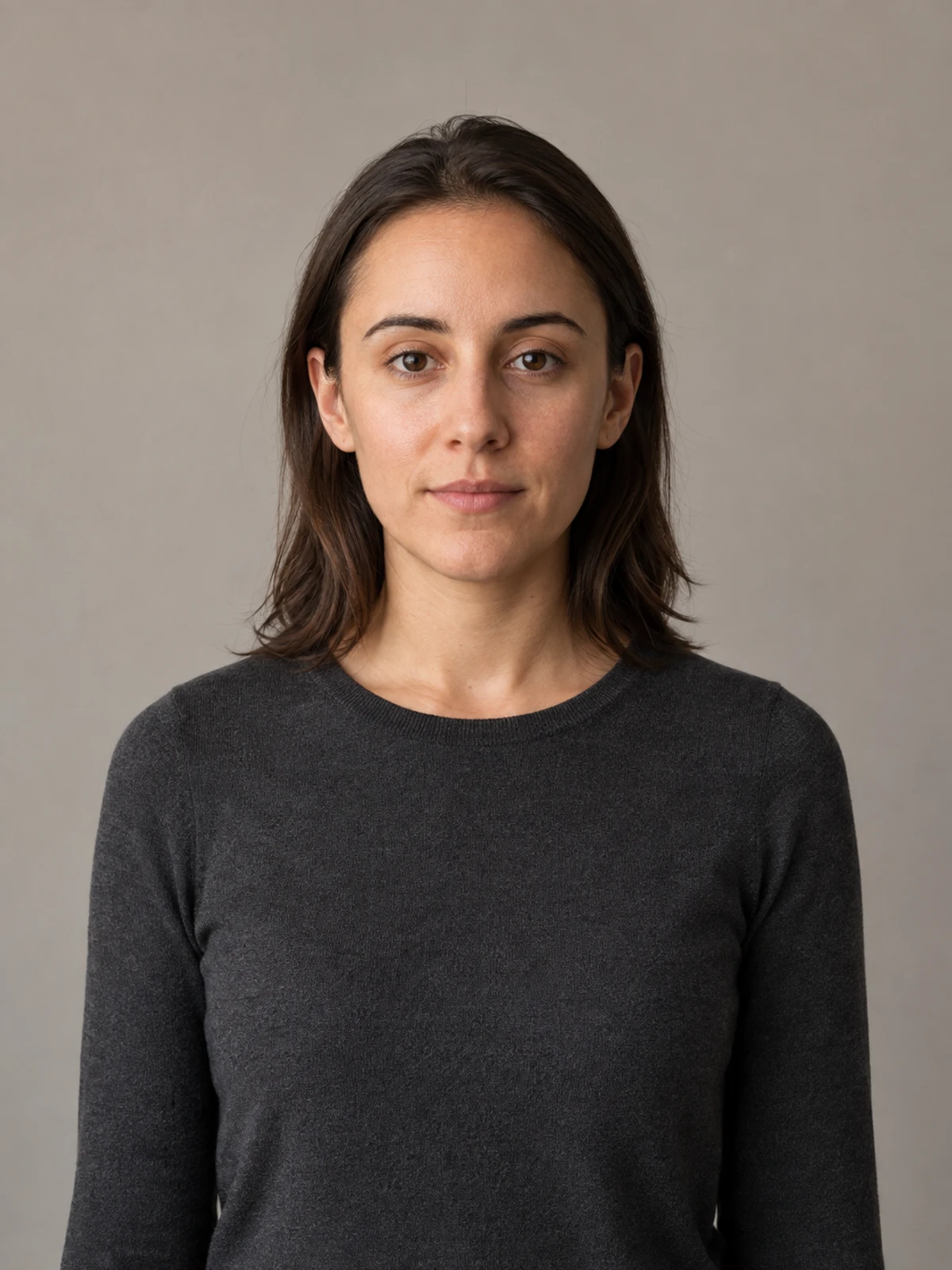
We crossed two scenes with two stock labels and two levels of prompt depth:
| Variable | Values |
|---|---|
| Scene | bright open shade beside pale stone; golden-hour backlight in a natural setting |
| Stock wording | Kodak Portra 400; Fujifilm Pro 400H |
| Prompt depth | stock name only; full behaviour recipe |
| Model | Nano Banana Pro |
| Generation setting | one independent 3:4, 1K edit per cell; no reroll or cherry-pick |
Each of the eight independent edits returned one candidate, using the same reference. This was a dedicated generation experiment, not a product-interface walkthrough. The images were fitted without cropping to a 1200 × 1600 display canvas; faces, colour and composition were not retouched.
The table records qualitative observations from the displayed files. Identity here means visual resemblance to the reference, not biometric verification. It is not a blinded, independently replicated assessment or an estimate of reliability.
| Scene | Prompt treatment | Visible observation |
|---|---|---|
| Open shade | Portra name only | Bright, warm-neutral and soft; little stock-specific separation |
| Open shade | Portra full recipe | Warmer and peachier; camera angle and pose drift most |
| Open shade | Pro 400H name only | Clean and slightly cooler; relatively close to the reference |
| Open shade | Pro 400H full recipe | Palest and airiest; cool green-blue cast, low contrast and some smoothing |
| Golden backlight | Portra name only | Strong golden-hour warmth; weak stock-specific separation |
| Golden backlight | Portra full recipe | Warmer skin, restrained peach and softer tonal transitions |
| Golden backlight | Pro 400H name only | Close to the Portra name-only result |
| Golden backlight | Pro 400H full recipe | Cleaner and paler, with cooler sky and shadows |
These observations concern eight individual outputs. Scene and pose drift prevent attributing every colour difference to the recipe.
Open shade: the recipe pair separates more clearly
Open shade is useful because it removes direct sun from the face. Every result reached the pale-stone outdoor scene, but the framing did not stay fixed.
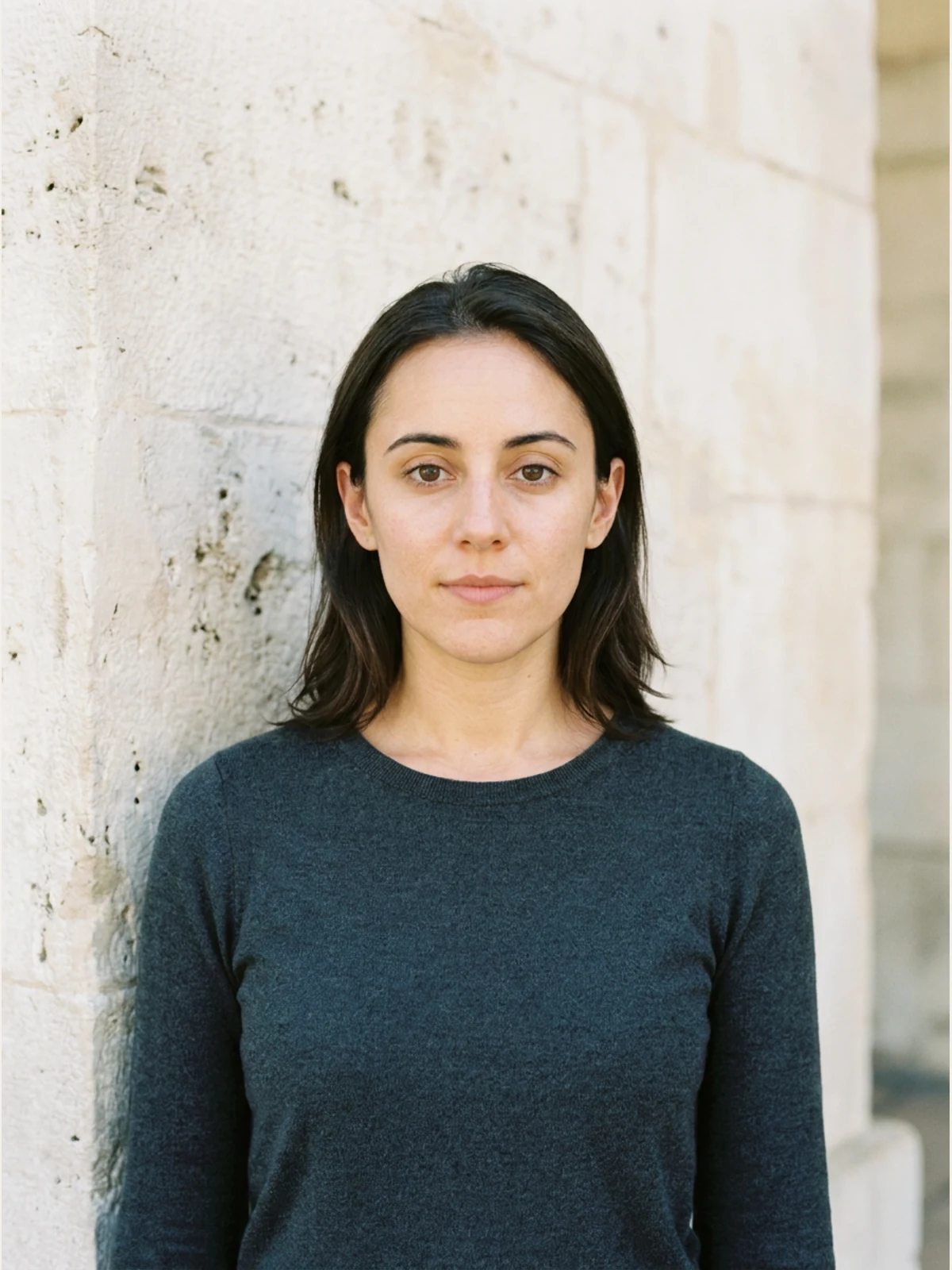
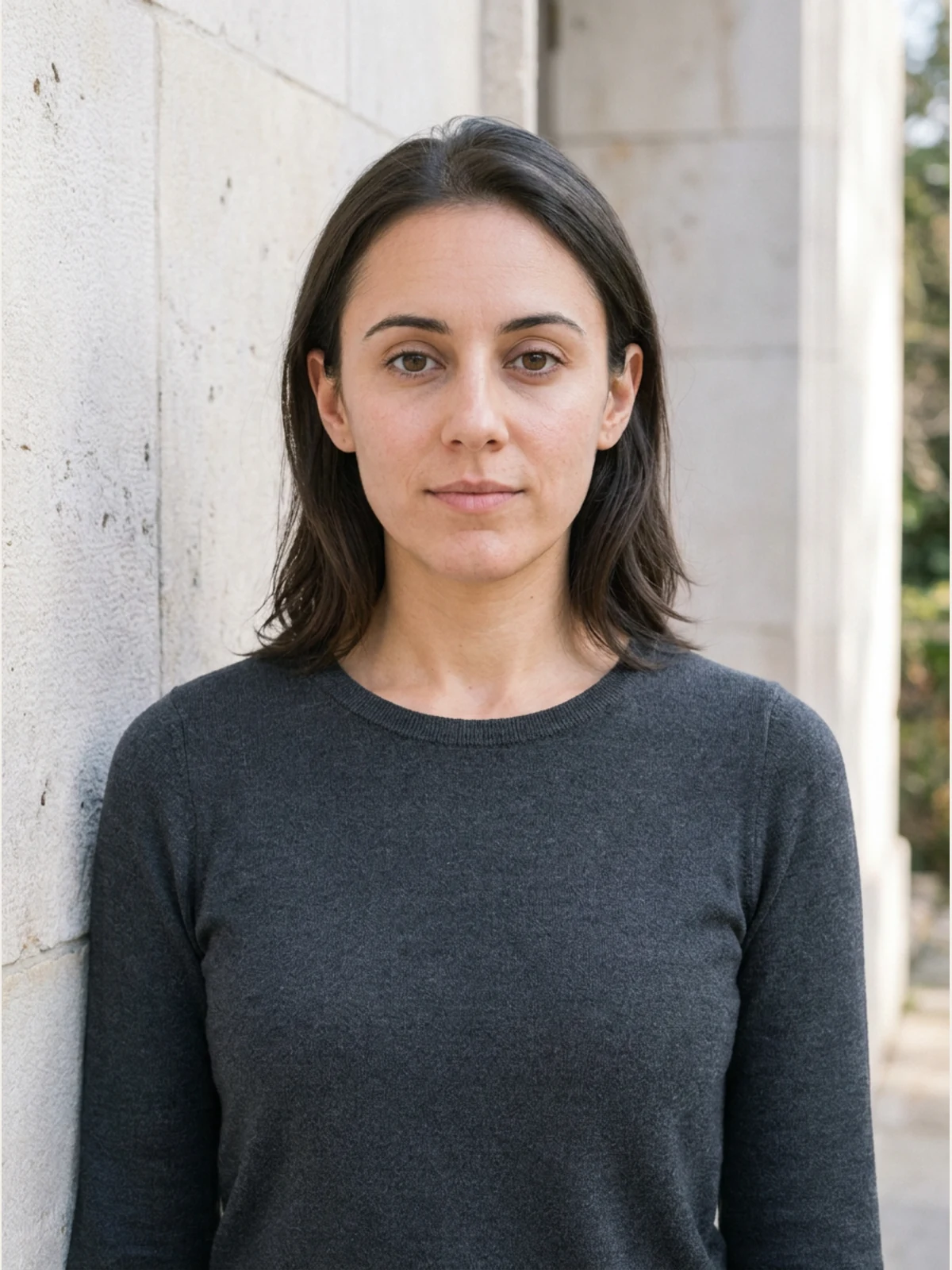
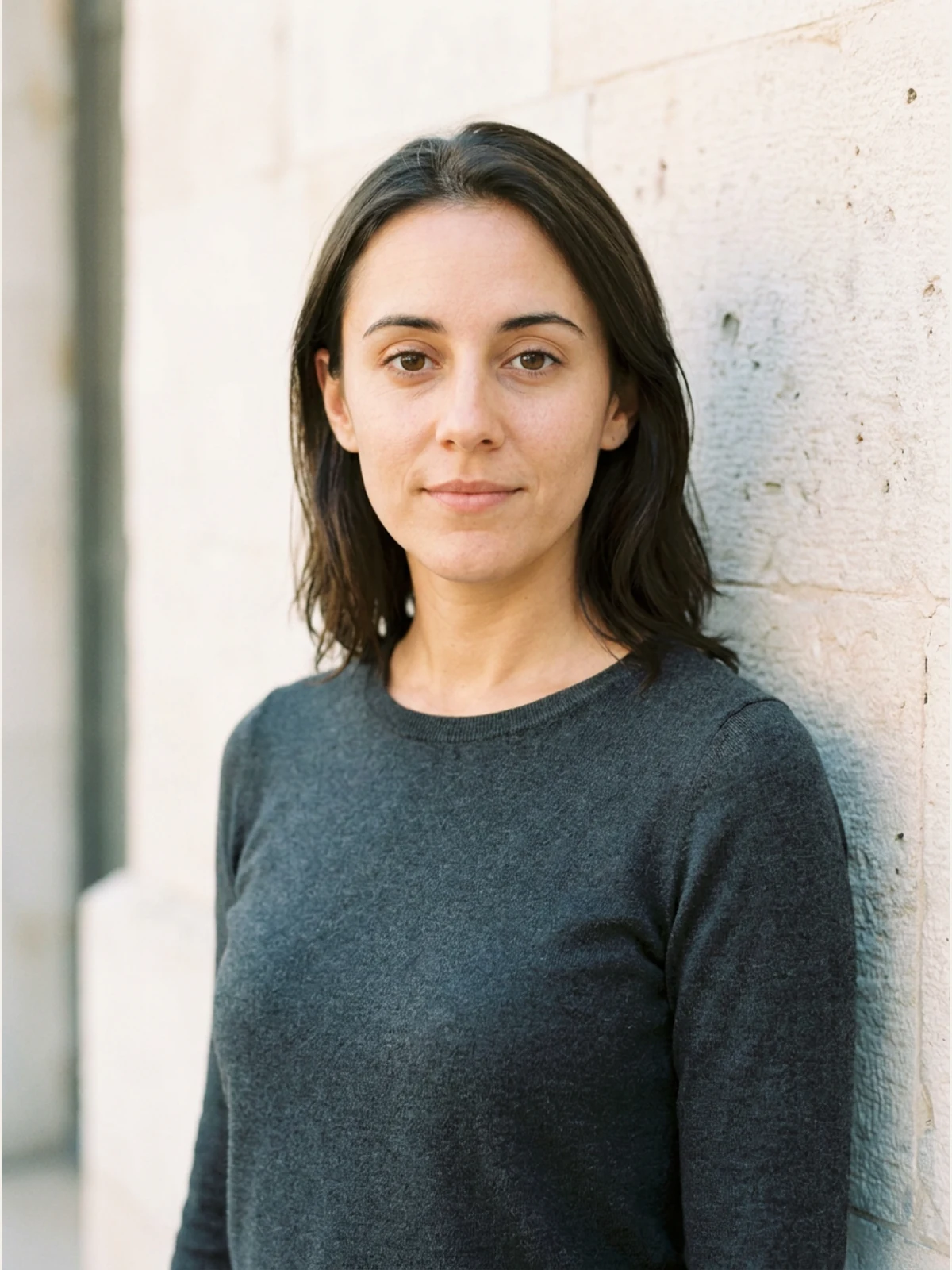
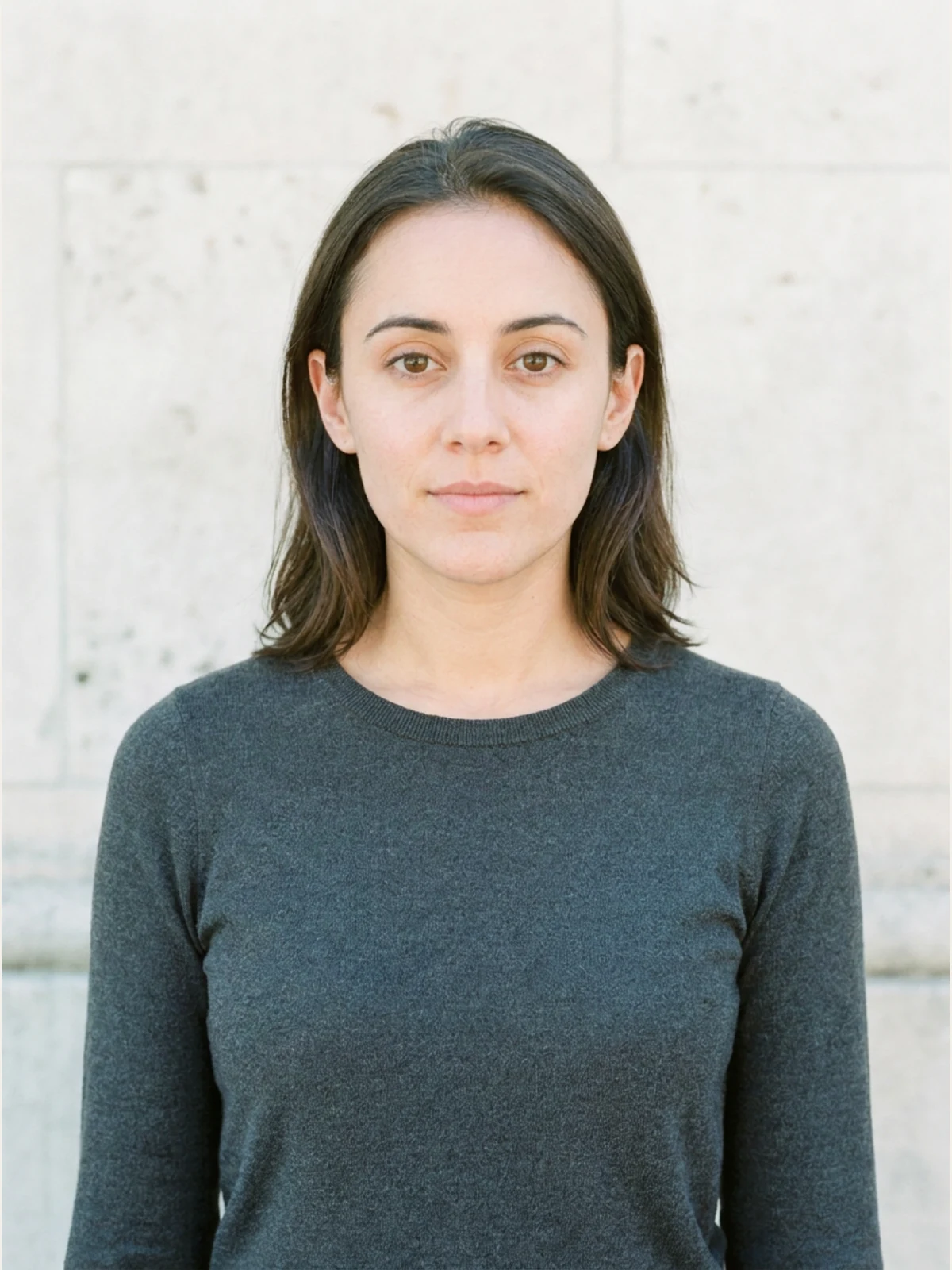
The two name-only images are attractive outdoor portraits, but “Portra” versus “Pro 400H” is not doing enough visible work to make the result predictable. The recipe pair is easier to distinguish: Portra reads warmer and peachier; Pro 400H reads brighter, more pastel and slightly green-blue. However, the Portra recipe also moves the subject into a three-quarter pose against the wall, so not every difference can be attributed to colour wording.
These are the exact four prompts.
Open shade, Portra name only
Edit the supplied neutral portrait into a realistic outdoor portrait photographed in bright open shade beside a pale stone wall. Preserve the adult subject's exact identity, facial features, natural skin texture, expression, gaze, hairstyle, charcoal top, body proportions, and 3:4 crop. Apply a Kodak Portra 400 film look. No visible words, film packaging, logos, product marks, borders, or extra people.
Open shade, Portra full recipe
Edit the supplied neutral portrait into a realistic outdoor portrait photographed in bright open shade beside a pale stone wall. Preserve the adult subject's exact identity, facial features, natural skin texture, expression, gaze, hairstyle, charcoal top, body proportions, and 3:4 crop. Apply a full Kodak Portra 400 rendering recipe: warm and accurate skin, restrained peach highlights, muted earthy reds, gentle cyan-blue shadows, moderate saturation, soft highlight roll-off, slightly lifted blacks, low-to-medium contrast, and fine unobtrusive 35 mm grain. No visible words, film packaging, logos, product marks, borders, or extra people.
Open shade, Pro 400H name only
Edit the supplied neutral portrait into a realistic outdoor portrait photographed in bright open shade beside a pale stone wall. Preserve the adult subject's exact identity, facial features, natural skin texture, expression, gaze, hairstyle, charcoal top, body proportions, and 3:4 crop. Apply a Fujifilm Pro 400H film look. No visible words, film packaging, logos, product marks, borders, or extra people.
Open shade, Pro 400H full recipe
Edit the supplied neutral portrait into a realistic outdoor portrait photographed in bright open shade beside a pale stone wall. Preserve the adult subject's exact identity, facial features, natural skin texture, expression, gaze, hairstyle, charcoal top, body proportions, and 3:4 crop. Apply a full Fujifilm Pro 400H rendering recipe: airy pastel color, clean luminous skin, delicate pink highlights, cool mint-green shadows, softened blues, restrained saturation, broad exposure latitude, low contrast, lifted blacks, and fine smooth 35 mm grain. No visible words, film packaging, logos, product marks, borders, or extra people.
Golden backlight: the scene overwhelms both names
Golden hour is a harder stock test because the low sun supplies a strong warm bias before a film name appears. That is exactly what happened. The two name-only results both read first as warm backlit portraits and only distantly as different stock directions.
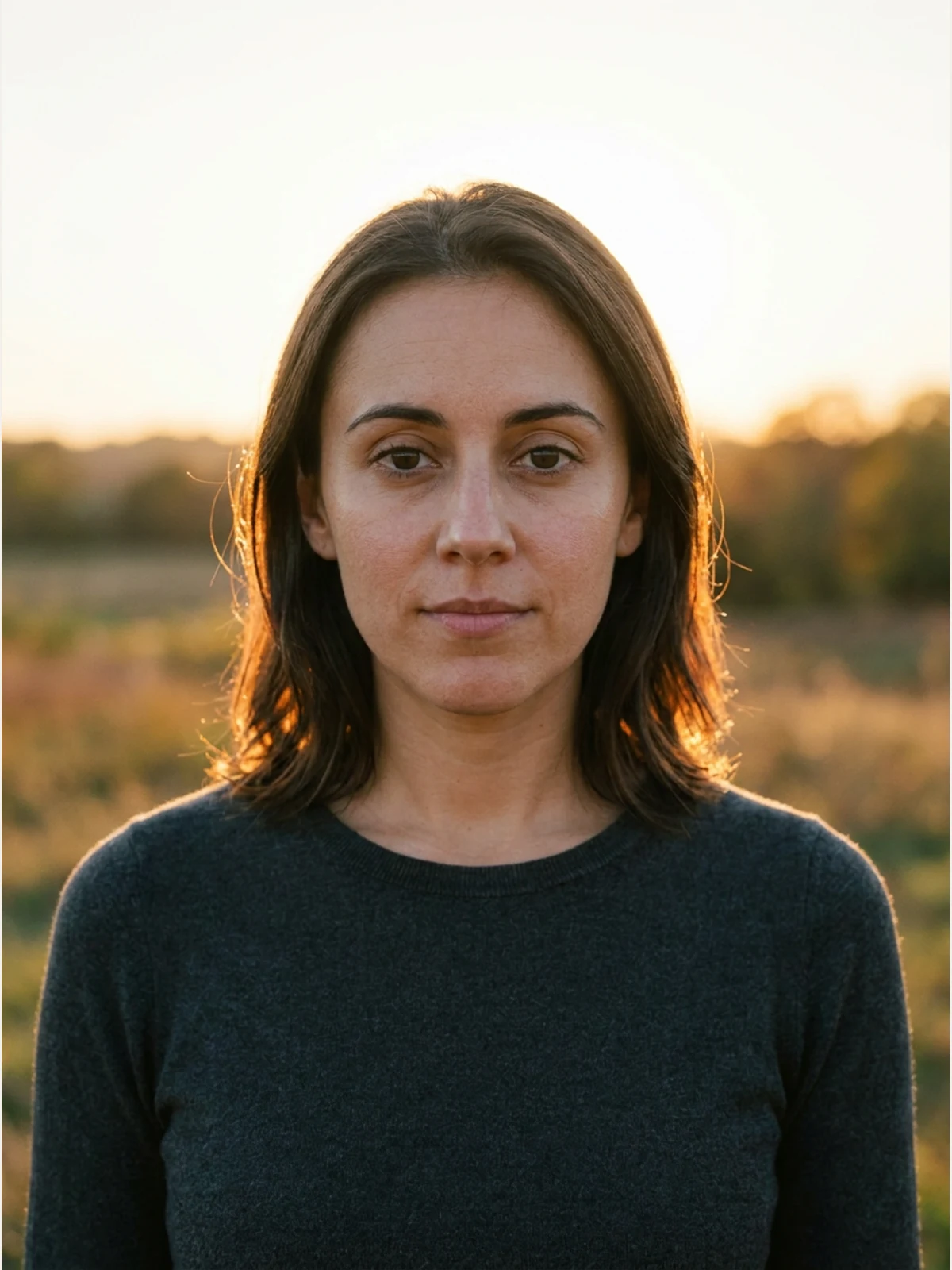
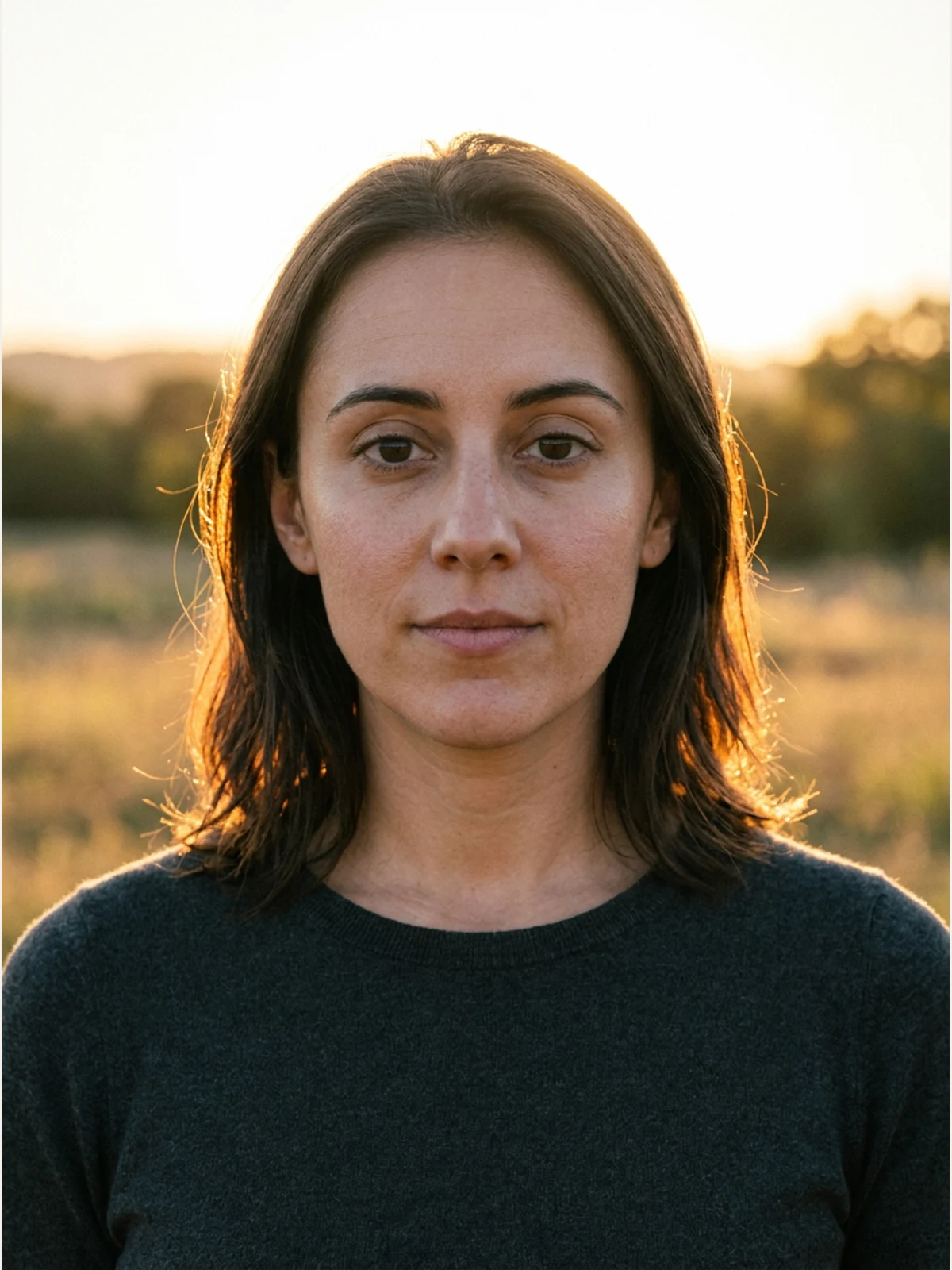
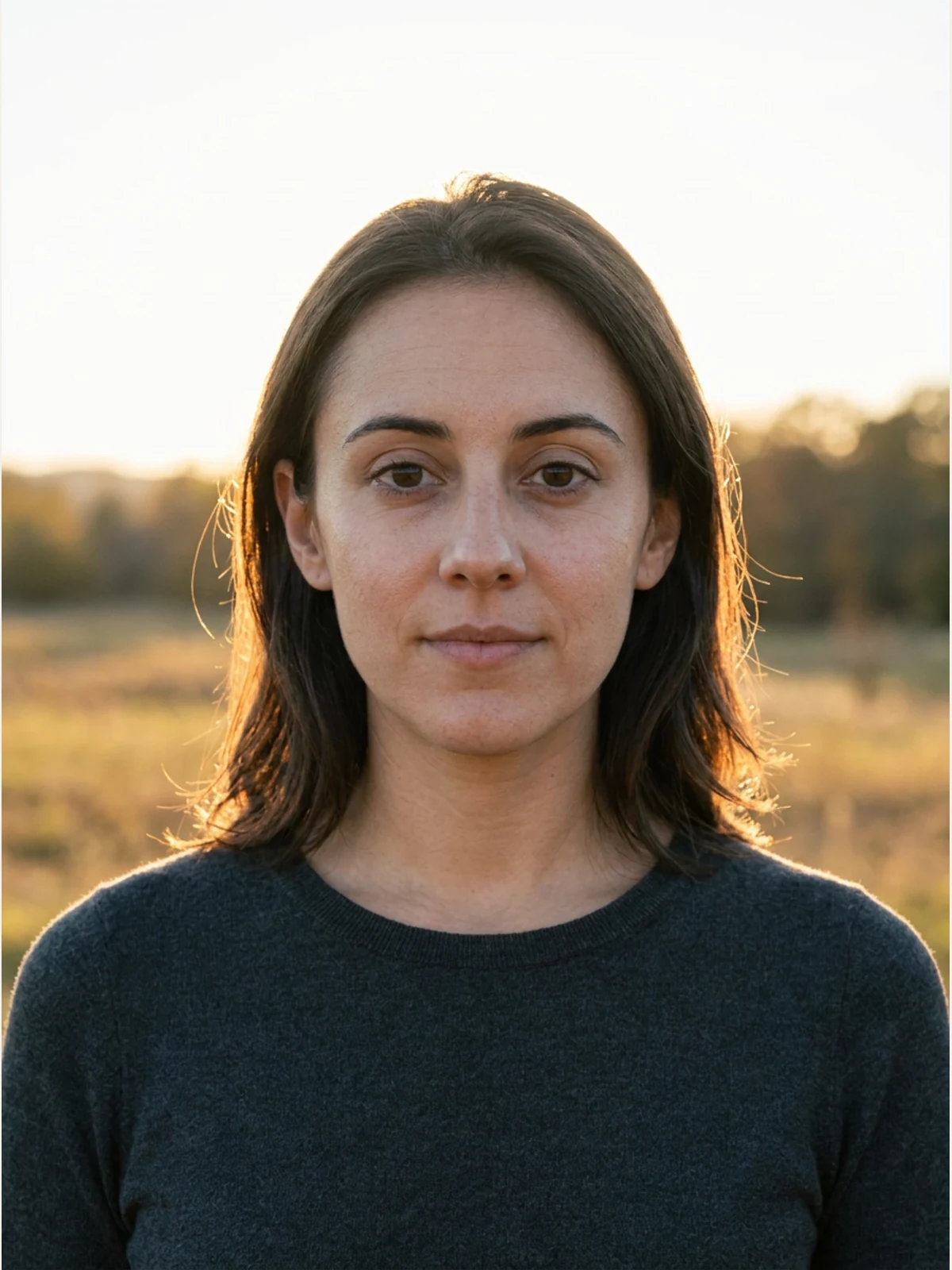
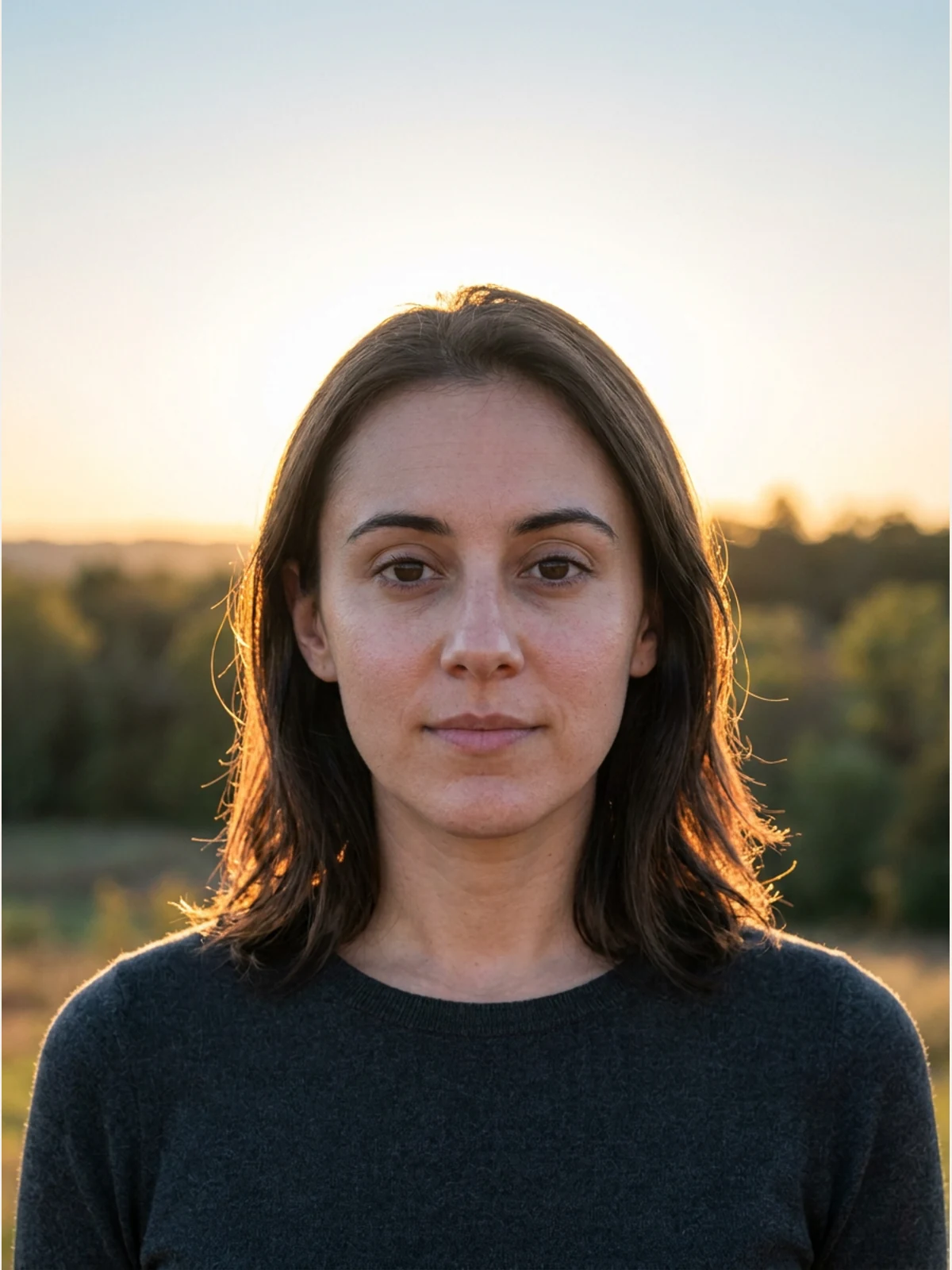
The full recipes do not erase the sunlight; they bend the rendering around it. The Portra result keeps more warmth in skin and mids. The Pro 400H result opens the frame, cools the sky-and-shadow relationship and feels less dense. Again, composition changed—the Pro 400H recipe leaves much more sky—so the honest conclusion is only that the intended directions are more legible, not that one stock recipe produced an exact or repeatable colour delta.
These are the exact golden-backlight prompts.
Golden backlight, Portra name only
Edit the supplied neutral portrait into a realistic outdoor portrait at golden hour with the low sun behind the subject, a narrow warm rim around the hair, softly illuminated skin, and a distant natural background. Preserve the adult subject's exact identity, facial features, natural skin texture, expression, gaze, hairstyle, charcoal top, body proportions, and 3:4 crop. Apply a Kodak Portra 400 film look. No visible words, film packaging, logos, product marks, borders, or extra people.
Golden backlight, Portra full recipe
Edit the supplied neutral portrait into a realistic outdoor portrait at golden hour with the low sun behind the subject, a narrow warm rim around the hair, softly illuminated skin, and a distant natural background. Preserve the adult subject's exact identity, facial features, natural skin texture, expression, gaze, hairstyle, charcoal top, body proportions, and 3:4 crop. Apply a full Kodak Portra 400 rendering recipe: warm and accurate skin, restrained peach highlights, muted earthy reds, gentle cyan-blue shadows, moderate saturation, soft highlight roll-off, slightly lifted blacks, low-to-medium contrast, and fine unobtrusive 35 mm grain. No visible words, film packaging, logos, product marks, borders, or extra people.
Golden backlight, Pro 400H name only
Edit the supplied neutral portrait into a realistic outdoor portrait at golden hour with the low sun behind the subject, a narrow warm rim around the hair, softly illuminated skin, and a distant natural background. Preserve the adult subject's exact identity, facial features, natural skin texture, expression, gaze, hairstyle, charcoal top, body proportions, and 3:4 crop. Apply a Fujifilm Pro 400H film look. No visible words, film packaging, logos, product marks, borders, or extra people.
Golden backlight, Pro 400H full recipe
Edit the supplied neutral portrait into a realistic outdoor portrait at golden hour with the low sun behind the subject, a narrow warm rim around the hair, softly illuminated skin, and a distant natural background. Preserve the adult subject's exact identity, facial features, natural skin texture, expression, gaze, hairstyle, charcoal top, body proportions, and 3:4 crop. Apply a full Fujifilm Pro 400H rendering recipe: airy pastel color, clean luminous skin, delicate pink highlights, cool mint-green shadows, softened blues, restrained saturation, broad exposure latitude, low contrast, lifted blacks, and fine smooth 35 mm grain. No visible words, film packaging, logos, product marks, borders, or extra people.
Why a behaviour recipe beats a nostalgic label
A stock name is a compressed cultural reference. It gives the model permission to improvise from everything associated with that name: scans, wedding portfolios, presets, social posts and captions. That may be enough when you only need a pleasant film mood. It is too ambiguous when Portra and Pro 400H must separate consistently inside the same project.
A useful recipe expands the label into seven observable controls:
| Control | Portra direction used here | Pro 400H direction used here |
|---|---|---|
| Skin | warm and accurate | clean and luminous |
| Highlights | restrained peach, soft roll-off | delicate pink, broad latitude |
| Shadows | gentle cyan-blue | cool mint-green |
| Saturation | moderate | restrained |
| Contrast | low to medium | low |
| Blacks | slightly lifted | lifted |
| Grain | fine, unobtrusive | fine, smooth |
These are prompt coordinates, not a declaration that real film can be reduced to seven sliders. Their advantage is testability: when the result is too green, too orange or too flat, you know which clause to change. With a name alone, the correction is guesswork.
Apply a beautiful nostalgic Fujifilm Pro 400H film look, dreamy and cinematic
Apply airy pastel colour, clean luminous skin, delicate pink highlights, cool mint-green shadows, softened blues, restrained saturation, low contrast, lifted blacks and fine smooth grain
One caution from the open-shade set: more detailed style language can compete with preservation instructions. The full Portra recipe made the warm/peach direction clearer but also produced the largest camera-and-pose change. One untested next step is to separate scene editing from a colour-only edit, then check identity after both stages. This experiment did not evaluate that workflow, and neither stage guarantees preservation. The complete prompt-engineering guide explains how to separate invariants from variables.
A reusable two-stock test template
Use this when you want to compare directions without pretending the output is a film scan:
REFERENCE LOCK:
Use the supplied portrait as the only identity reference. Preserve face shape,
features, expression, gaze, hairstyle, clothing, body proportions, camera angle,
crop and perspective.

SCENE:
[Describe one light condition and one background. Keep them identical in every run.]

RENDERING RESPONSE — change only this block:
[SKIN RESPONSE]
[HIGHLIGHT COLOUR AND ROLL-OFF]
[SHADOW COLOUR]
[SATURATION]
[CONTRAST AND BLACK LIFT]
[GRAIN SIZE]

Change colour response only. Do not change pose, camera, crop, wardrobe, face,
background geometry, add text, packaging, logos or extra people.
For Portra, fill the response with warm-neutral skin, restrained peach highlights, muted earth reds, gentle cyan-blue shadows, moderate saturation and slightly lifted blacks. For the Pro 400H-inspired lane, use luminous skin, delicate pink highlights, cool mint shadows, softened blues, restrained saturation and lower contrast.
Then run more than one image. A single pair shows possibility; it does not show reliability.
How to make the next test genuinely stronger
If you are choosing a recipe for a campaign, use a small matrix rather than one hero image:
- Define a repeat count appropriate to the decision before generating, and complete it for every scene × recipe cell.
- Record the visible model version, quality, aspect ratio, reference and exact prompt.
- Blind the stock label before reviewers score colour direction, identity, crop and scene fidelity.
- Define the scoring criteria before review and retain failures as well as preferred images.
- If a seed control is available, record it; the same seed number does not establish equivalence across models.
- For colour claims, add a fixed colour target and sample defined regions. For real film emulation, compare against calibrated scans made under documented exposure, development and scanner conditions.
That experiment could estimate repeatability. This page deliberately stops before making that claim.
Real gallery prompts to take apart
The controlled outputs above are from September 3, 2026. The curated gallery references below illustrate related lighting and tonal vocabulary. They are not additional test cells or proof of prompt causality.

Curated reference for window backlight around shoulders and hair; not a comparison of wording.
View promptHide prompt
Using Sony A7R V camera with 35mm f/1.4 lens, realistic shot, sharp and clear. Stunning 20-something Asian young woman with refined features like a top Korean girl group idol, sitting by the bed with wrinkled sheets in softly lit room. Simple loose white silk camisole nightgown, looking out the window. Soft morning light outlines her figure with backlit silhouette, revealing fine hairs on bare shoulders and arms. Fair and translucent skin showing unedited real texture. Tranquil, private, natural atmosphere, 8K resolution with natural film grain.

A dark editorial portrait whose prompt spells tonal control out clause by clause instead of relying on the word Fuji.
View promptHide prompt
A young woman in a deep squat position on tiled floor, knees spread wide, weight low and centered, powerful commanding posture. Hat brim pulled low covering eyes completely, only lips visible with a slight pout, confident and unbothered expression. Nude natural lip color, slightly pouty lips.

Attire: Black newsboy/baker boy military cap with brim pulled low over eyes. White dress shirt with only collar and upper chest visible. Black narrow necktie loosely knotted. Black oversized leather jacket with structured shoulders, worn open. Black sheer stockings/tights. Black pointed-toe stiletto pumps/high heels. All black with white shirt accent. Dark editorial, Helmut Newton-inspired power dressing.

Composition: Full body shot, subject looming over camera. 16-20mm ultra wide angle lens. f/8 aperture for deep focus with everything sharp. Ultra low angle with camera flat on ground tilted up, lens almost touching ground surface. Extreme wide-angle distortion with foreground stiletto heels appearing dramatically oversized, vertical lines converging toward ceiling, subject towering over viewer. Centered symmetry framing. Foreground: massively exaggerated stilettos and tile floor filling lower third. Middle ground: subject in powerful squat position dominating mid-frame. Background: ornate doors and ceiling converging upward. Subject looms over the camera creating strong sense of power and intimidation. Dead center subject placement filling frame vertically. 9:16 aspect ratio.

Lighting: Natural indoor ambient light. Left-rear window light, soft and diffused. Even soft mood with no harsh shadows, subtle sheen on leather jacket surface. Soft natural daylight filling room.

Color palette: Fujifilm PRO Neg Hi (NH) film simulation. Precise tonal control, strong blacks, clean whites, controlled contrast, professional fashion editorial look. Dominant black clothing and accessories. Clean white/cream walls, doors, and shirt collar. Pale porcelain skin. Platinum silver hair. Subtle pink accent from bags on wall. Clean white highlights not blown, rich deep blacks with detail retained, medium-high controlled contrast, porcelain pale skin with cool undertone, minimal grain with clean editorial look.

Environment: European luxury apartment / boudoir setting. White ornate double doors with decorative handles. Baroque-style mirror frame visible through doorway. Elegant crown molding on ceiling. Pink designer handbags and shoes displayed on right wall. Light-colored polished tile floor. Contrast between feminine luxury interior and dark powerful styling.

Mood: Commanding, mysterious, dark editorial elegance, dominatrix aesthetic softened by luxury setting, "you are not worthy of eye contact" energy.

Technical: photorealistic, extreme low angle, wide angle perspective, fashion editorial, deep focus, centered symmetry, frame within frame.

Soft backlight through hair with weak frontal fill—the light shape behind many airy film-inspired portraits.
View promptHide prompt
{
  "subject": {
    "description": "Young East Asian woman, positioned in profile turning to look back at the viewer.",
    "pose": "Looking over shoulder, slight head tilt, body angled away from camera.",
    "expression": "Soft, neutral to slightly melancholic, contemplative gaze, lips slightly parted."
  },
  "clothing": {
    "upper_body": "Dark, structured jacket or blazer, possibly pinstriped or textured fabric.",
    "visibility": "Mostly obscured by shadow and foreground elements."
  },
  "hair": {
    "color": "Dark brown to black.",
    "style": "Long, loose, tousled waves, slightly messy texture.",
    "lighting_interaction": "Strongly backlit, creating a glowing halo effect on loose strands (rim lighting)."
  },
  "face": {
    "skin_tone": "Fair/pale with warm undertones.",
    "features": "Soft facial structure, almond-shaped eyes, natural eyebrows.",
    "makeup": "Minimal, 'no-makeup' look, natural lip color."
  },
  "accessories": {
    "visible_items": "None clearly visible due to framing and lighting."
  },
  "environment": {
    "setting": "Cluttered interior space, resembling a workshop, storage room, or old bookstore.",
    "background_elements": "Wooden shelves stacked with indistinct objects, papers, boxes, and plastic packaging.",
    "foreground_elements": "Blurred translucent objects (possibly glass, plastic sheets, or dust covers) creating layers and reflections."
  },
  "lighting": {
    "source": "Natural sunlight streaming through a window on the left.",
    "quality": "Golden hour, warm, diffuse but directional.",
    "effects": "Strong backlighting/rim lighting on hair, volumetric dust motes dancing in the light, lens flares, soft glare, dramatic contrast between light and shadow."
  },
  "camera": {
    "perspective": "Eye-level, shot through a foreground obstruction (glass or clutter).",
    "focus": "Shallow depth of field (bokeh), sharp focus on eyes/face, blurred background and foreground.",
    "lens_character": "Soft focus, film grain simulation, slight bloom effect."
  },
  "style": {
    "aesthetic": "Cinematic, atmospheric, nostalgic, slice-of-life, ethereal.",
    "mood": "Dreamy, intimate, quiet, sentimental.",
    "visual_reference": "Film photography, Japanese photobook style."
  }
}
Cool green-blue shadows motivated by fluorescent store lighting rather than applied as a global colour wash.
View promptHide prompt
{
  "portrait_prompt": {
    "subject": "Woman with long straight hair, wearing a simple white sleeveless top and a delicate pearl necklace. She is leaning playfully forward over the handle of a black wire shopping cart in a dimly lit convenience store aisle. She has a cute, spontaneous expression, winking one eye and puckering her lips in a playful kissy face. She holds a smartphone in her hand. The aisle is lined with shelves stocked with colorful beverage cans and bottles.",
    "composition": "Medium shot, vertical framing, 35mm focal length, capturing the depth of the supermarket aisle behind her. The composition feels like a candid snapshot taken by a friend.",
    "camera_angle": "Slightly high angle looking down at the subject, creating a cute and intimate perspective.",
    "lighting": "Direct on-camera flash style lighting (snapshot aesthetic) that illuminates the subject brightly while letting the background fall into shadow. Mixed with ambient overhead store lights visible as bokeh points.",
    "color_palette": "Fujifilm Classic Negative simulation, strong film texture and grain, high contrast. Cool greenish-blue tones in the shadows typical of fluorescent store lighting, contrasted with natural skin tones. Vintage lo-fi aesthetic.",
    "mood": "Playful, spontaneous, late-night urban vibe, authentic, fun, Gen Z aesthetic, 'grocery store photoshoot' trend.",
    "negative_prompt": "Unrealistic features, anatomical errors, stiff pose, over-processed, harsh lighting, blurry, low resolution, bad composition, distorted faces, unnatural colors, extra limbs, watermark, text, bright daylight"
  }
}


Open any card to copy its full prompt, browse more Nano Banana prompts, or run the two recipes in the LocalBanana generator.
The practical conclusion
Do not choose between Portra 400 and Pro 400H by adding one brand name to the end of a finished prompt. In this run, the light and scene overpowered that shorthand—especially at golden hour. Choose the visible response you want, write it as skin, highlight, shadow, saturation, contrast, black and grain behaviour, then keep those clauses as a reusable block.
The Portra-inspired recipe is the warmer, peach-and-earth lane in this test. The Pro 400H-inspired recipe is the airier, paler, cooler and lower-contrast lane. Both are creative directions. Neither is proof of a faithful film simulation, and neither should be trusted for a series until repeated outputs show that identity and composition remain stable.
FAQ
Is Portra 400 or Fuji Pro 400H better for AI portraits?
Neither is universally better. In this one-run test, the Portra recipe created the warmer, peachier direction; the Pro 400H recipe created the airier, cooler, lower-contrast direction. Pick the response that serves the scene, then run multiple outputs to check whether it stays consistent.
Does writing only the film stock name work?
It can create an attractive mood, but it separated the two stocks weakly here. The golden-hour name-only pair was especially close because the warm backlight dominated both. Add explicit skin, highlight, shadow, saturation, contrast, black-lift and grain instructions when the distinction matters.
Is Fujifilm Pro 400H still available?
Fujifilm marks PRO 400H discontinued. Its January 2021 notice stopped 135 production immediately and anticipated allocating 120 film through the end of 2021. Existing physical stock may still appear on resale markets, but that is different from ongoing manufacture.
Are these images accurate simulations of real Portra 400 and Pro 400H?
No such claim is made. They are AI edits guided by film-inspired language. We did not photograph a colour chart, expose film, process negatives, scan them under a calibrated workflow or compare spectral response. Use the outputs as art direction, not colour-science evidence.
How do I preserve the same person while changing the film look?
Put identity, expression, clothing, pose, crop and camera perspective in a reference-lock block before the style instructions. Tell the model to change colour response only. Then inspect several results: this test still showed moderate identity and composition drift even though the preservation request was explicit.